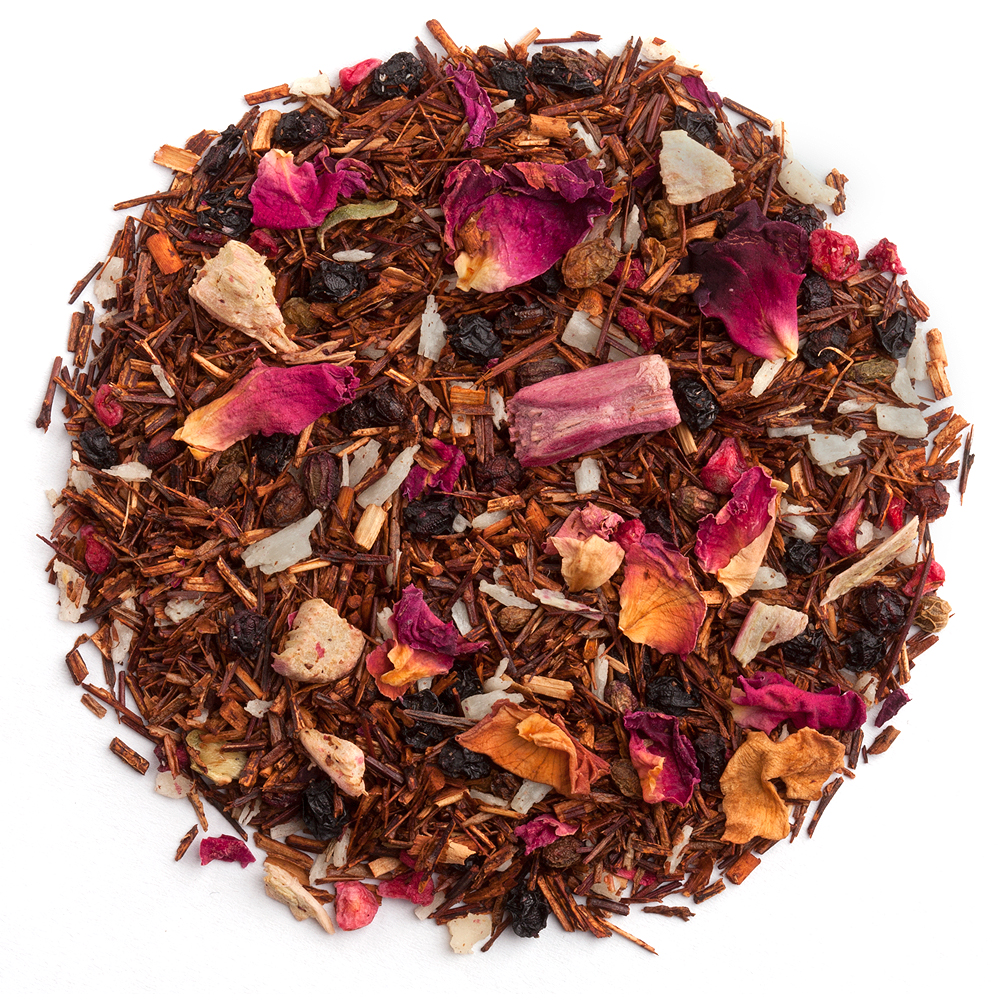
Raspberry & Rhubarb
Rooibos – fruit and rhubarb
Select variant
Available in 3 variants
 60g
Product Name:
Raspberry & Rhubarb
SKU:
963303
Availability:
Currently sold out
Product Price:
4,16 €
without TAX
4,95 € incl. tax
4,95 € incl. tax
 200g
Product Name:
Raspberry & Rhubarb
SKU:
9963303
Availability:
In stock
Product Price:
12,06 €
without TAX
14,35 € incl. tax
14,35 € incl. tax
 500g
Product Name:
Raspberry & Rhubarb
SKU:
1963303
Availability:
In stock
Product Price:
26,81 €
without TAX
31,90 € incl. tax
31,90 € incl. tax
Availability
Availability: In stock
Your price: 12,06 €
without TAX
14,35 € incl. tax
14,35 € incl. tax
- a traditional herbal drink from South Africa that is popular all over the world
- caffeine-free and very easy to brew
- rich in antioxidants and minerals
- delicious taste with no bitterness or astringency
- an ideal soothing drink for everyone, offering a range of potential health benefits
Rooibos has a distinctive brownish-red colour. Its green leaves and twigs are cut and turn red during the oxidation process. Despite this, rooibos contains no caffeine and is a rich source of vitamins and minerals that may enhance overall health.
Rooibos is safe to drink throughout the day and is ideal for children, pregnant women, or as a calming evening beverage. It pairs wonderfully with milk, can be sweetened with honey, or enjoyed as a refreshing iced drink during the summer.
At the beginning of the 20th century, this herbal tea gradually became known to Europeans. In 1904, the first merchants began importing it from Cape Town, South Africa. Rooibos gained significant popularity and even partially replaced black tea during the Second World War due to a severe shortage of Chinese tea. However, large-scale commercial cultivation did not start until around 1960.

Amount of tea
1 tsp. (2g) / 200ml

Steeping time
5 min

Caffeine
NO

Temperature
95˚C


Bonthe newsletter