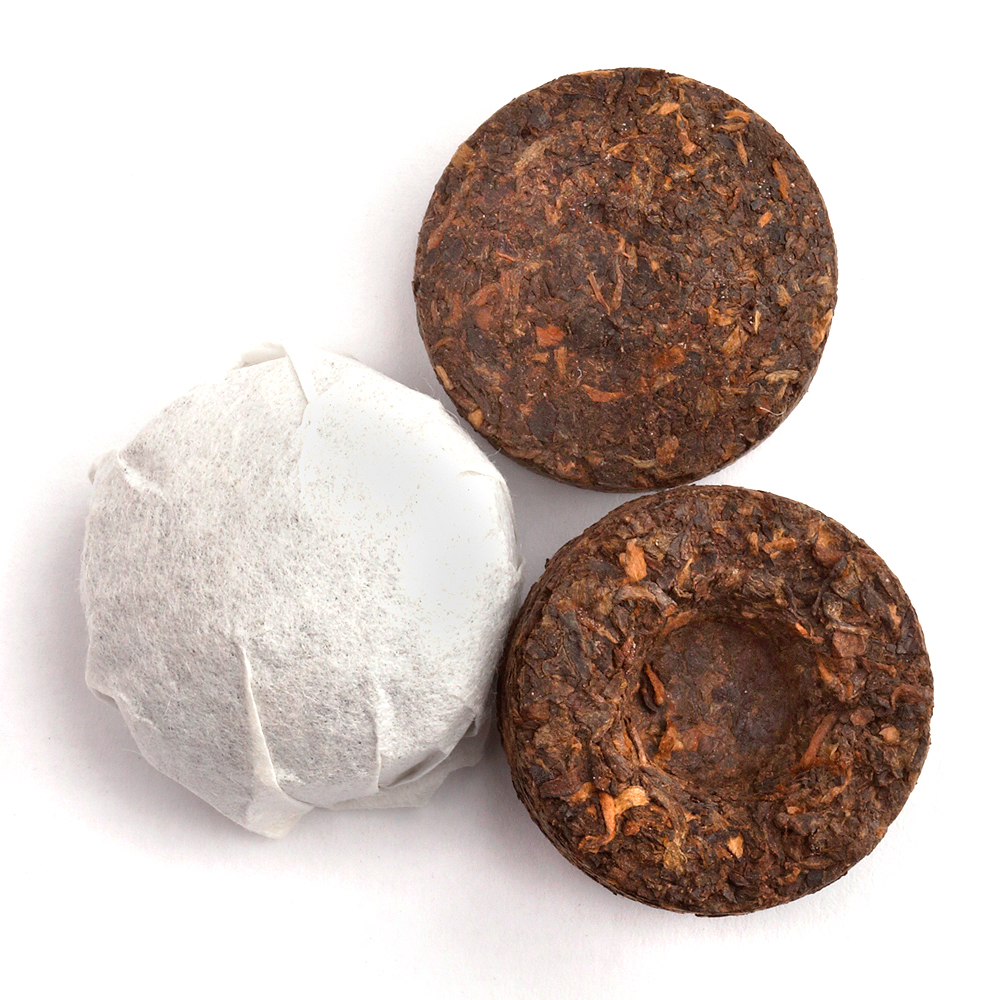
Pu-Erh Mini Tuocha
also known as: Pu´er
 50g
5,35 € incl. tax
 200g
18,95 € incl. tax
 500g
41,90 € incl. tax
5,35 € incl. tax
Full-bodied, earthy taste.
- full-bodied, dense Pu-Erh
- a very rich taste due to the faster brewing of smaller leaves
- an unusual shape resembling bird's nests
Tuocha are Pu-Erh leaves pressed into a shape resembling a small bird's nest or bowl.
In the past, they had a hole in the middle and were strung on a rope like beads to make them easier to transport.
Each nest weighs about 5 grams making it ideal for infusing in a smaller teapot.
Mild to moderately stimulating.
Drinking Pu-erh tea regularly may have a beneficial effect on digestion, even after a heavy and fatty meal. It may help break down so-called bad cholesterol (LDL), lower blood sugar levels, and promote weight loss. Pu-erh is also an excellent choice for a diet high in animal protein, as it may help with fat metabolism. Pu-Erh is a good dietary supplement, but it is not a substitute for a varied diet, nor for any medicines or treatments prescribed by your doctor.
Yunnan is the foremost Pu-Erh production region in the world. The finest tea is produced in the southern part of the province, particularly in the mountainous areas of Simao and Xishuangbanna. In addition to cultivated tea gardens, wild tea trees, some hundreds of years old, thrive in the subtropical jungles. It is not uncommon for farmers to climb several metres into the tree crowns to harvest the leaves. The tea is named after the town of Pu'er, which has long been a trading hub for Pu-Erh tea. Historically, tea was exported from Pu'er to distant regions such as Tibet, Mongolia, and Beijing.
Black tea
There are two types of Pu-Erh tea, but they are very different – Shu (or mature) and Sheng (or raw) Pu-Erh.
This particular tea belongs to the Shu category, which first appeared around 1973. Known for its typical dark leaves and rich taste, it is produced using an accelerated ripening method called wo dui (wet piling). The tea leaves are piled up in large warehouses and covered with water and cloth. The increased temperature and humidity causes micro-organisms to form, which start the fermentation process – an essential phase in the production of Shu Pu-Erh. The entire production process takes approximately 40 - 50 days under the careful control of the tea masters. Shu Pu-Erh is produced in very large quantities, unlike the expensive "green" Sheng Pu-Erh, which is relatively rare.
also known as: Pu´er


