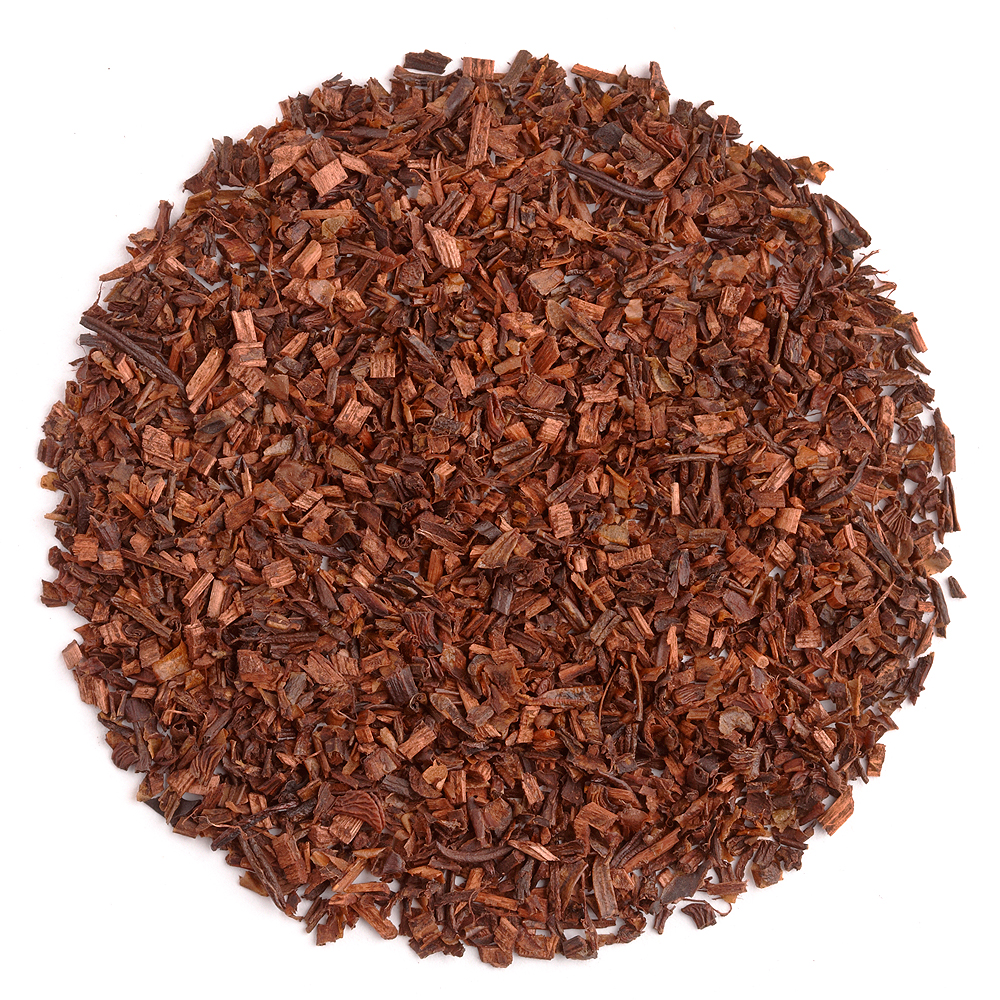
Honeybush
also known as: Heuningbos
Honeybush, South Africa
Select variant
Available in 3 variants
 100g
Product Name:
Honeybush
SKU:
960051
Availability:
Currently sold out
Product Price:
5,62 €
without TAX
6,69 € incl. tax
6,69 € incl. tax
 250g
Product Name:
Honeybush
SKU:
9960051
Availability:
In stock
Product Price:
12,56 €
without TAX
14,95 € incl. tax
14,95 € incl. tax
 500g
Product Name:
Honeybush
SKU:
1960051
Availability:
In stock
Product Price:
22,27 €
without TAX
26,50 € incl. tax
26,50 € incl. tax
Availability
Availability: Currently sold out
Your price: 5,62 €
without TAX
6,69 € incl. tax
6,69 € incl. tax
- a delicious herbal tea with a very tempting honey-like taste and aroma
- it is grown exclusively in a small, wild region of South Africa
- rich in antioxidants and minerals
- a sweeter taste compared to the related Rooibos
- naturally caffeine-free
- it doesn’t turn bitter, even with extended steeping
- a healthy herbal infusion suitable for everyone
Honeybush is caffeine-free, making it suitable for children, pregnant women, or simply as a healthy, soothing beverage.
It remains smooth even after a long infusion due to its very low tannin content.
Honeybush pairs wonderfully with honey, which further enhances the tea's natural sweetness. It can also be enjoyed as a refreshing iced tea.
The name Honeybush comes from the sweet honey scent of its distinctive yellow flowers.
Honeybush is a shrub about one metre tall and is closely related to the well-known Rooibos, though it has a slightly sweeter taste.
For the herbal infusion, honeybush leaves and twigs (not the flowers) are used. They are cut, bruised, oxidised, and then dried in the sun.
Commercial cultivation of Honeybush began in 1996. Despite this, over 80% of the leaves are still harvested from wild bushes.

Amount of tea
1 tsp. (2g) / 200ml

Steeping time
5 min

Caffeine
NO

Temperature
95˚C


Bonthe newsletter