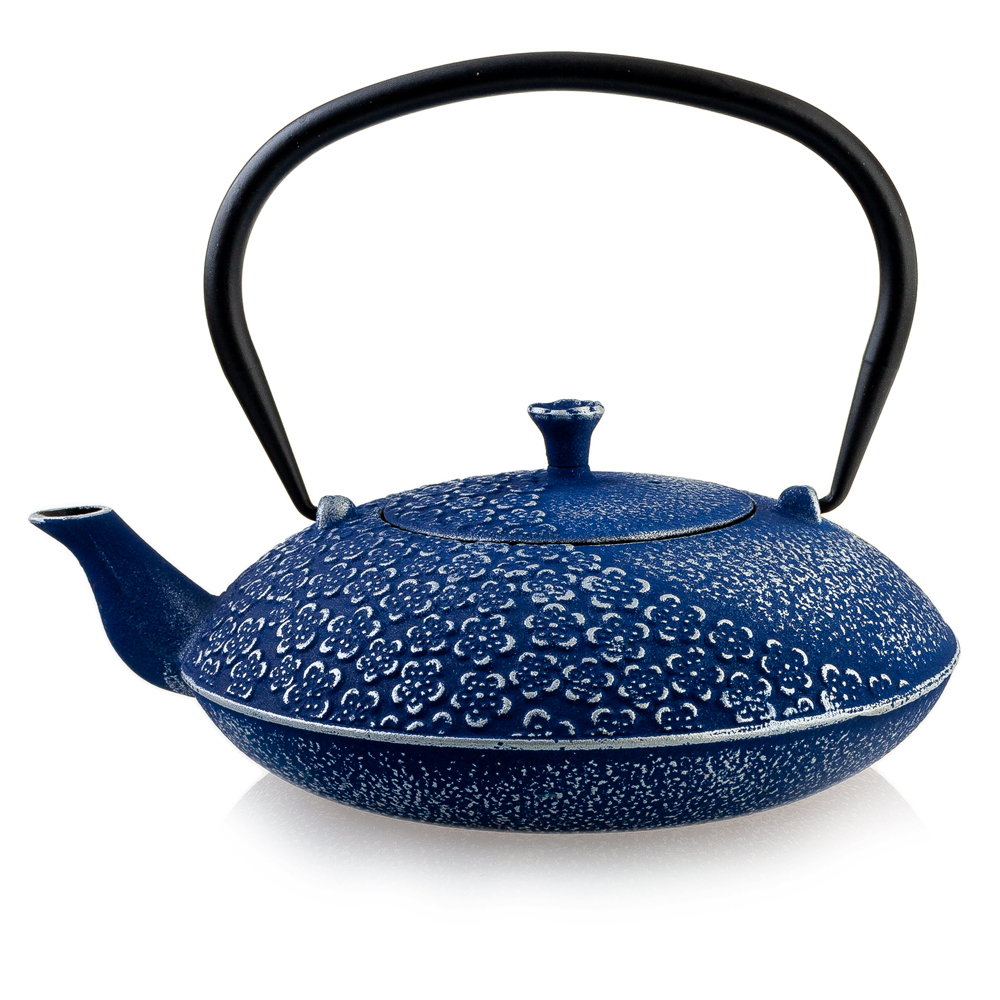
Hanami
42,55 € incl. tax
- uniquely attractive design
- retains heat, keeping your tea warm for an extended period
- robust and long-lasting, cast iron can endure high temperatures
- inner enamel layer prevents rust and makes maintenance easier
- a stainless steel filter allows tea to be brewed directly
Cast iron kettles originated in Japan, where they are known as Tetsubin, meaning "iron kettle". In Japan, they have become an integral part of the Chanoyu tea ceremony. Tetsubin teapots were traditionally used to heat water over charcoal and were made entirely of cast iron, with capacities ranging from 0.5 to 5 litres.
Cast iron kettles designed for the Western market are practical, resistant to damage, and visually attractive. They feature an enamel-coated inner layer and are equipped with a filter for direct tea brewing. Due to these differences from the traditional Tetsubin kettles, they are known in Japanese by the slightly different name Tetsukyusu. Additionally, these kettles are compatible with modern heating systems, such as electric hobs, induction cooktops, and ceramic stoves. However, the inner enamel layer can be sensitive to rapid or intense heat; therefore, cast iron kettles are generally not recommended for direct heat sources like open flames or high-temperature burners.
Cast iron
kettle capacity: 1100 ml
heating: electric hobs, induction cooktops, ceramic stoves
We do not recommend heating over a direct heat source such as an open flame or a gas burner.
How to care for cast iron kettles:
1.) Never clean cast iron kettles with soap or detergents.
2.) After use, simply rinse with hot water and allow to air dry or wipe thoroughly with a cloth.
3.) Do not cover the kettle with a lid while there is still water or moisture inside after use.
4.) Cast iron kettles are not dishwasher safe and are not suitable for use in a microwave oven. Always allow the kettle to cool naturally after use. Avoid contact with salt and oil.
5.) The inner layer of enamel prevents rust. However, if rust does appear inside the kettle (or on the outside), it can be removed with a soft toothbrush. In this case, the rust is completely harmless.


