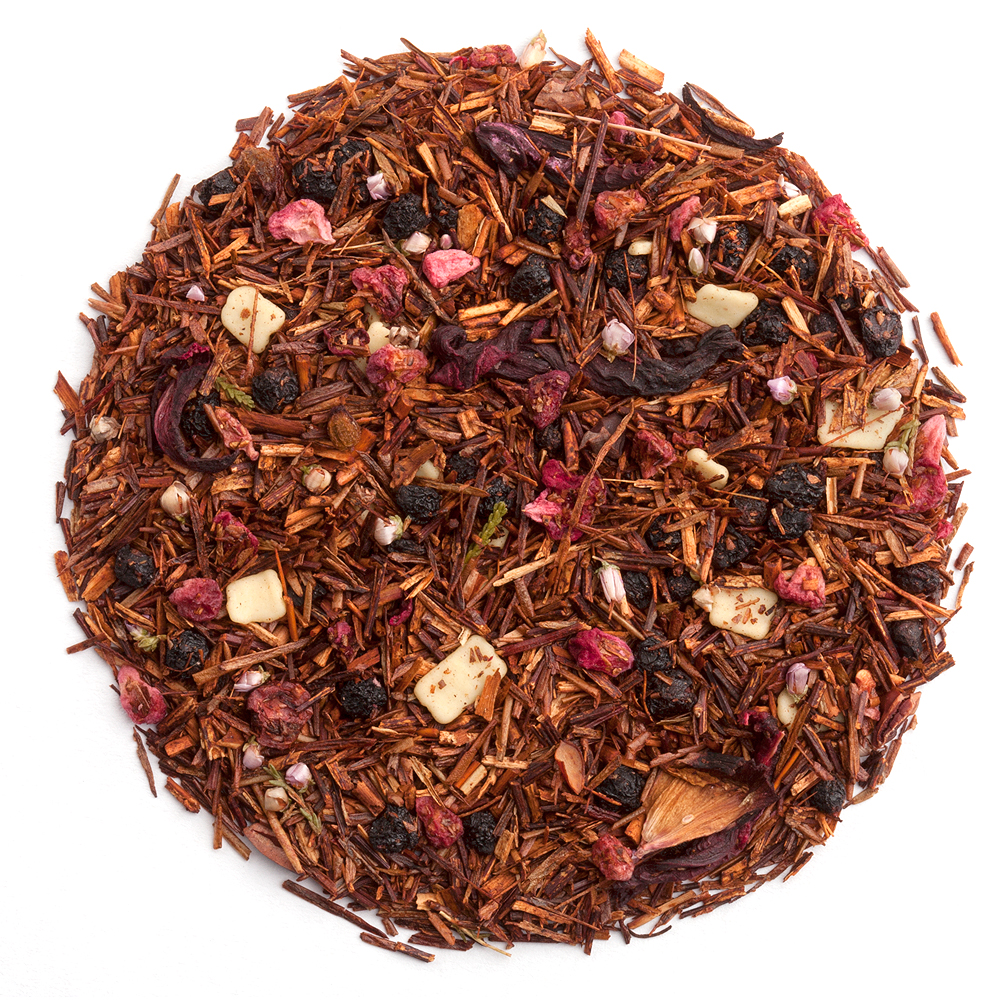
Chocolove
Rooibos with a taste resembling creamy chocolate and sweet caramel.
- a traditional herbal drink from South Africa that is popular all over the world
- caffeine-free and very easy to brew
- rich in antioxidants and minerals
- delicious taste with no bitterness or astringency
- an ideal soothing drink for everyone, offering a range of potential health benefits
Needle-shaped leaves. Dark red coloured infusion.
Rooibos has a distinctive brownish-red colour. Its green leaves and twigs are cut and turn red during the oxidation process. Despite this, rooibos contains no caffeine and is a rich source of vitamins and minerals that may enhance overall health.
Rooibos is safe to drink throughout the day and is ideal for children, pregnant women, or as a calming evening beverage. It pairs wonderfully with milk, can be sweetened with honey, or enjoyed as a refreshing iced drink during the summer.
Rooibos is rich in antioxidants and may improve bone and tooth health, slow the aging process, and help manage type II diabetes and asthma. It may also help reduce stress and boost the immune system. Additionally, it may improve digestion, treat allergies and insomnia, and may reduce the risk of chronic diseases. Rooibos is a good dietary supplement, but it is not a substitute for a varied diet, nor for any medicines or treatments prescribed by your doctor.
Rooibos, also known as red bush, is a shrub native to the Cederberg Mountains in the Western Cape Province of South Africa. This region is so unique that it was declared a UNESCO World Heritage Site in 2004. It is home to around 9,000 different plant species, nearly 70% of which are endemic to the area. Rooibos is one of these distinctive plants. Its needle-shaped leaves are harvested each January, when summer reaches its peak in this part of Africa, with daytime temperatures soaring to an extraordinary 40°C.
Rooibos, elderberry, flavouring, white chocolate (3.5%) (sugar, dried whole MILK powder, cocoa butter, sunflower lecithin emulsifier, natural flavouring), raspberries, hibiscus flowers, cocoa beans, heather flowers.
Nutrition declaration per 100 ml: energy value 18 kJ/ 4 kcal, fats 0g (of which saturated fatty acids 0g), carbohydrates 0g (of which sugars 0g), proteins 0g, salt 0.03g.
Rooibos has been used in the folk medicine of indigenous African tribes for over 300 years. Its health benefits were first discovered by members of the Khoikhoi ethnic group. They processed parts of wild rooibos bushes using stone pestles, which caused the crushed branches and leaves to oxidise, giving them their distinctive dark red colour. The leaves were then boiled in hot water and left to bubble throughout the day.
At the beginning of the 20th century, this herbal tea gradually became known to Europeans. In 1904, the first merchants began importing it from Cape Town, South Africa. Rooibos gained significant popularity and even partially replaced black tea during the Second World War due to a severe shortage of Chinese tea. However, large-scale commercial cultivation did not start until around 1960.


